
Thursday, January 13, 2022

COVID Renaissance


Although many had hoped 2021 was the year to emerge from the grip of the COVID-19 pandemic, the construction industry continued to struggle with unprecedented challenges. Problems such as labor shortages, supply chain delays, rising costs, and financing hurdles have plagued the industry over the past twelve months. Just when one thinks we can see a light at the end of the tunnel, the light turns into another gut-wrenching variant in the form of Delta or Omicron. Deliveries are delayed, orders postponed, flights cancelled, etc. The list goes on and on.

After close to two years of having to deal with a myriad of external challenges, the construction industry is suffering from COVID fatigue. So it is during this period of staggering price increases and problematic construction delays that I present to you a story of hope and revitalization. During the past two years, Re-View Windows worked on a preservation project that serves as a great example of what is possible. I present to you the restoration of the Fannin County courthouse in Bonham, Texas.

The history of the Fannin County courthouse is not the glamorous one that you would expect for a National Landmark. Originally constructed in 1888, the building was one of many courthouses designed by Texas architect, Wesley Clark Dobson. The structure’s rough-cut limestone, distinctive mansard roof, and cherry-top clock tower gave it unique architectural appeal. In 1929 a fire destroyed the roof and the clock tower, and both were discarded in favor of a cost-saving flat roof. If abandoning its architectural trademark wasn’t bad enough, 36 years later the courthouse was modernized by replacing all windows and installing a flat stone cladding around the entire exterior to modernize the structure. Many have likened this brutalist conversion to a vintage Cold War-era Eastern European architectural style. The converted building became a mundane shadow of its original beauty.


A conversion in 1965 completely altered the courthouse design

In 2016 the voters of Fannin County were called to determine the fate of their beleaguered community centerpiece. It wasn’t an easy decision since the costs to restore the building to its original grandeur were more than constructing a new courthouse. A large grant from the Texas Historic Commission (THC) was a significant factor in making revitalization a feasible option.


There wasn't much left after removal of the 1965 conversion

When the exterior stone cladding added in the 1960s was removed, the damage to the original limestone rendered the structure’s appearance similar to a bombed structure in Dresden, Germany during WWII. The collective experience of the craftsmen involved in structural, masonry, millwork, and roofing was staggering. The masonry restoration work itself was absolutely epic. Re-View was brought in to manufacture replica mahogany windows to match what would have been in the courthouse from its early days. We even matched the weight and pulley balances that existed in the original windows back in the day. Meticulous attention to detail on thousands of features like this were attended to by the architectural team at Architexas.


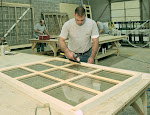
Installation of Re-View's replica mahogany windows

The courthouse is scheduled to reopen in early 2022 and now stands as an example of what a community can accomplish given extreme conditions. Add a pandemic-tainted construction schedule to the mix and the restoration is truly remarkable. The resulting rebirth of the 1888 courthouse will not only alter the town square in Bonham, Texas, but will forever change the community’s future. This is obvious as you drive into Bonham and see the clock tower beaming in the distance from miles away.


Let the magnificence of the restored Fannin County courthouse serve as a beacon of hope for all of us as we move beyond the pandemic in 2022. Fannin County shows us that the path to grace and beauty is often littered with challenges. Happy New Year!


Thursday, January 14, 2021

Protests Inspire Changes


The protests over the past year have been successful in inspiring at least one change: The commercial construction industry will be forced to enter a new era of building security. I say this because watching the events of last week in Washington, DC, made me reflect upon the numerous calls my company received to repair windows damaged during protests last summer at various state capitol buildings we have restored.. The events of the past year have made public building security a vital element in the design of new and conversion of existing civic buildings in the United States. The construction industry has always been driven by meeting customer’s functional needs and the events of this past year are abruptly thrusting the industry to reevaluate building security.

 I don’t think we can view the violent protests of the past year as a mere aberration or one-time response to political and social unrest fueled by an affliction of COVID frustration. Our country’s transgression into property damage isn’t going to be saved or medicated by a new political administration or a vaccine. We are now in an era where fringe groups on both poles of the political spectrum are being fueled by the power of social media. The social media framework provides a structure and voice to promulgate ideologies that inspire violent actions against community structures everywhere. I predict that the occurrence of property damage and security breaches will become increasingly more commonplace over the next five years.


 The issue of security is not new to the construction industry. The Oklahoma City bombing in 1995 and the 9/11 terrorist attacks had a profound effect on the architectural design community. After those events, the industry responded with blast-resistant windows and doors to be installed at military and other high-risk facilities across the country. Re-View Windows was asked to design and manufacture historic ballistic-rated windows for historic structures, and an entire niche industry blossomed. Unfortunately, I believe we are now at another turning point in the construction industry where the security of public buildings will become a top priority.

 The breach of security at the nation’s capital last week inspires the notion of a whole new level of security in the design of new public buildings and the renovation of existing historic structures. Architects and engineers will be looking at windows and doors with a new set of priorities. Existing security products such as security films, shutters, specialty glazing, and security screens will become more commonplace. Designers might also work with manufacturers to solve custom challenges such as how to secure a historic structure without compromising the architectural detailing. Re-View Windows works closely with the design community to provide security windows for historic applications, maintaining the original architectural integrity and design of the structure while upgrading the building to meet today’s increased security needs.


 I predict that window and door manufacturers will step up to the plate to design new products that meet various security standards. The American Architectural Manufacturers Association (AAMA) and Window and Door Manufacturers Association (WDMA) uses testing protocols devised by ASTM International as a guide to manufacturing windows and doors that meet desired security performance metrics. Progressive manufacturers will be coming out with new designs that upgrade the forced-entry resistance to their window and door products to meet the new demands of security threats. These changes will be manifested in entirely new product lines as well as enhancements to existing systems that improve security performance. The future will also bring changes in window frame, sash, and hardware design in addition to the use of increased levels of security glazing.

 General contractors will also have to adapt to learn how these systems are integrated into the construction or renovation of the structure. Many of these products will involve other changes to the building envelope, structural changes to the walls, and installation challenges. Specialty subcontractors who understand the design and installation of these new systems will become increasingly more influential in the building process.

 The past year has certainly been challenging for the entire world. Unfortunately, the challenges of building security that have availed themselves through protests in the United States will be with us for the long haul.


More about Re-View: Re-View Windows manufactures security and ballistic windows for historic landmarks. We solve the challenge of meeting both historic preservation standards and security performance requirements.

Tuesday, April 16, 2019

A Sign of the Times


When you work on the preservation of historic properties, it is always exciting to discover some hidden artifact preserved for decades. Recently while I was removing wallpaper from a wall in the hallway of my home, I discovered a hidden signature on the plaster that said, “This wall finished papering by WM Pelletier, July 21st, 1910”. William Pelletier was so proud of his work back in 1910 he was compelled to sign his name. As I reflected upon this discovery, I realized that it captures a major shift in people’s attitudes from then to now. The era of taking pride in a job well done is being threatened.

Thirty-plus years ago, the net worth of an individual was measured by the competence of his/her work. No matter what vocation you were in, whether it be doctor, politician, professional athlete, or tradesman, the skills deployed in your work were a direct reflection of who you were. In the construction trades, this meant you attended to the details of your job even when nobody noticed. It meant you went the extra mile because you saw your work as being a reflection of your values. You put your best effort into everything you did, not because someone was watching, but because that is who you were.

Over the past fifteen years, there has been a shift in this ethos. Work no longer defines our character. Our vocation has morphed into a means to support the activities we truly enjoy. Work is work, not an activity that fulfills our purpose. This attitude fuels a work ethic based upon doing the bare minimum to just get the job done. The goal of work is now to make as much money as you can rather than do the best job possible. You see this behavior in retail workers, flight attendants, and the health industry. It has become so pervasive that it can be rare to find someone who truly enjoys their work.

In the construction industry, the minimalist state of mind has produced an industry of checks and balances put into place to assure that work is done to satisfactory levels. Instead of relying on the pride of the workforce, we depend upon detailed specifications defining all work processes. Excellence is achieved by a system of quality control measures where workers are monitored by management, video surveillance, and QC checks. Re-View, for example, uses a litany of tests to assure quality control on all of our work. The days are gone where all you had to do is tell someone how to perform a task. Now you have to check their work to ensure all of the details are satisfied.

I don’t know how we got here. Maybe it is a result of us Baby Boomers spoiling our kids and burning ourselves out in the pursuit of a desired status of living. Maybe it is an outgrowth of the Great Recession where careers were displaced and employers began to treat the staff like disposable assets. It could be a product of social media, where people are more concerned with how they are perceived in a virtual reality rather than in the real world. It could also be a result of the pursuit of the almighty buck at the expense of everything else. Or perhaps it is some combination of these and other factors that have shifted our perspective.

The construction industry is at a turning point. A generation of people dedicated to their trade is about to retire, and there are too few self-motivated people in the system ready to take the lead. If the next generation of leaders is more interested in making it to Friday than making a difference, we are all in trouble.

Wednesday, January 16, 2019

This Trend is Sustainable


Sometimes trends in the construction industry are reflected in the strangest of places. I read an article about how the H&M clothing store is struggling. For those of you who don’t have teenage daughters who are always looking for cheap and stylish clothing, H&M is renowned for selling low-priced, trendy clothing that might last for one season. They have mastered the trade of selling disposable clothing. The fact that their sales are down reflects a consumer trend that is moving towards quality and sustainability rather than fashion. Consumers are being drawn towards classic designs that will last for decades. Recently, I have seen this same trend towards quality and away from throwaway building materials gaining momentum in the construction industry.

For the past thirty plus years, the construction industry has concentrated on how to deliver a structure for the lowest possible price. This obsession with lowering cost has driven manufacturers to pursue cheaper materials and designs, and owners to squeeze every penny from the bidding process. This “price is king” mentality consistently drove down quality of design, materials, and labor to a point where class action lawsuits became the resulting profitable industry. Just like the cheap blouse at H&M, windows, hardware, appliances, plumbing fixtures, lighting, etc. are designed to reside in the landfill after satisfying a ten-year warranty. But a growing dissatisfaction with cheap construction practices has given birth to a refreshing trend towards sustainability.

I first saw this movement towards quality reflected in my business. Re-View Windows restores historic windows and manufactures historic replica windows that are designed to perform for centuries. Our business model is based upon quality, not price, and over the past 25 years, we have seen a consistent demand for business. Our products are also designed to be easily maintained to extend the life over several generations. One doesn’t have to look far for other examples of the drive towards quality and sustainable design: 
  1. The Green Building Movement which has previously focused on energy efficiency has expanded to concentrate on sustainability and recyclability. The life cycle of a building is a critical factor in this program.
  2. The use of recyclable materials is expanding in all areas of the construction industry with materials such as aluminum, glass, and wood gaining acceptance at the expense of petroleum-based products like vinyl.
  3. The glass industry is shifting its priorities from energy efficiency to quality. “We became myopic about energy efficiency…now we are starting to think in terms of life cycle,” said Mic Patterson of Schuco USA.
  4. The need for increased strength has long driven the concrete industry for years. Now, due to the escalation in repair and replacement costs, manufactures are paying more attention to durability than strength.
  5. Commercial project bidding practices are evolving as evidenced by the increasing popularity of the Integrated Project Delivery (IPD) method. Rather than basing the reward of a project on lowest price, this method connects the owner, design team, and key subcontractors to work together from design through implementation.
  6. Building Information Modeling (BIM) has adopted a “circular construction” model where materials stay in play for longer, getting reused or recycled whenever possible. Buildings are being viewed as “material banks” and the bill of materials captured by BIM facilitates reuse.
  7. The use of independent quality control of construction processes is more widely used than ever before. At Re-View, for example, we have glazing, finishes, sealants, and other elements tested by independent agencies on a regular basis.
I’m greatly heartened to see this trend toward better-quality and more sustainable construction
practices gain a foothold. It’s been missing for far too long, resulting in added job expense in the form of rework, missed deadlines, and shoddy workmanship. When construction quality suffers, the
industry as a whole suffers. I’m hopeful that as we move into 2019, we’ll see a greater emphasis on
quality control and personal ownership of all aspects of the end product. For now, since my daughters
are both grown, I’m just glad my days of purchasing sub-standard clothing at H&M are over.


Friday, August 17, 2018

Statehouse Work


Re-View is one of the few companies that excels at the disciplines of wood window restoration, steel window restoration, and manufacturing wood window replicas  for large National Register Landmarks. This is best exemplified by our current State Capitol restoration work. At the moment, Re-View is working on five capitol buildings. We are restoring the existing steel windows on the Oklahoma and Nebraska Capitol buildings. Our craftsmen are also restoring the wood windows at the Colorado Capitol. The Michigan Capitol will soon be graced with our wood window replicas to match the original design. And finally, we are finishing up work on the Wyoming Capitol where we are performing a combination of wood window restoration and fabricating replicas.


Friday, January 6, 2017

Reflections on 2016


I think that almost everyone would agree with me that 2016 was a crazy year on many counts. We were bombarded with bizarre events in sports, industry, human relations, and entertainment. This past year will be remembered for some time to come. In the wake of all of this tumult, the construction industry has trudged along under the radar. Both commercial and residential construction have grown to levels not seen for eight years. Construction-related employment has correspondingly advanced at almost twice the rate of conventional job growth. One thing I don’t like about the consistent and plodding growth we have experienced is that it tends to numb your motivation. So in an effort to keep myself alert, I looked at some key events from the past year that might provide inspirational lessons on how to make the most of 2017.

Your Strengths Can Cover UP Weakness

I am not a fan of mixed martial arts (MMA), but I am a student of success, and have found Ronda Rousey’s story to be an interesting example for any business. Rousey went from working three jobs to support herself to putting a women’s sport on the map. She was dominant in the ring, eliminating many opponents in less than 30 seconds. Unfortunately, her dominance became her Achilles heel because it was based upon doing only one thing very well. As her opponents became stronger in other methods of fighting, Rousey ignored this trend and continued to do what she did best. This strategy eventually led to a first loss in 2015 and an embarrassing defeat last Friday.

Most successful businesses achieve greatness by doing a few things very well. Amazon has done it in logistics, Apple in technical design, and Costco in retailing to serve as a few examples. Rousey shows us that it is time to look at whether our strengths are clouding our judgement. Are your competitors making strategic changes that threaten your business? Are companies from other industries entering your marketplace for the first time? Are there subtle shifts in your marketplace that are not visible because you are too busy with your nose to your grindstone? The time is right for a little strategic introspection before someone punches you in the face.

Never Give Up

The Chicago Cubs are the best example this past year of an outfit that struggled for the past century to meet their goals and finally came through with a World Series victory 108 years later. This unprecedented Series drought is the longest recorded by any major American sports team. Although the Cubs made it to the Series seven times during this period of famine, they always came up short. People were beginning to believe that a curse levied by the owner of the Billy Goat Tavern in 1945 was real. In 2016 the Cubs were able to shake the curse and ascend to the top of Major League Baseball.

Every business has its challenges whether they are minor or critical to survival. I think most people spend their efforts pursuing their dreams rather than basking in the glory of their achievements. And as is typical, our dreams are confronted, derailed, or undermined on a regular basis. At times one can wonder if attainment of a desired goal is even possible. At these times of despair, it is good to remember stories like the Cubs scripted in 2016. Anything is possible if you never give up.
    
It’s Never Too Late

I remember reading about the problems facing the Rio Olympics during the nine months preceding the games. When you combine delays in construction, construction defects, safety concerns, water & air pollution, failed infrastructure, and the Zika virus, it is amazing that the games weren’t cancelled. Given insurmountable odds of having their country ready to host, Rio came through in the end with a lot of hard work and some good ole fashioned luck.

Businesses often find themselves in overwhelming circumstances where the task at hand is daunting. Whether you have challenges in fueling unprecedented growth, developing a new product line or service, opening a new office, or struggling to stay afloat, achieving one’s goals can often appear impossible. If you ever find yourself wondering how you will make it to the finish line, remember Rio. The Olympics show us that anything is possible no matter how frightening the challenge.

I’m sure there are many other lessons to be learned from 2016, but these are a few that stood out to me. Since success in business can be fleeting, it helps to reflect upon lessons learned from external events so our strategies have a chance to continue to serve us well. May 2017 be your best year ever!

Thursday, September 22, 2016

Capitol Improvements


One of Re-View’s strengths is its ability to work on historic windows for very large and complex National Register landmarks. Currently, we are working on four State Capitols at the same time. Each one has a unique set of challenges that makes our business fascinating. We are doing the following scope of work on these projects:

  • Minnesota State Capitol: Re-View is finishing up its work on this project. We restored the historic exterior doors applying faux finishes on the interior. We removed existing aluminum replacement windows, restored the original wood window frames and fabricated and installed replica wood window sash into each opening. This brought the Capitol back to its original look.
  • Colorado State Capitol: Re-View is performing wood window restoration on the existing window openings. We are removing the sash and bringing them back for a complete overhaul and restoring the frames in the field. When we are done with this work, the windows will be ready to perform for another 100+ years.
  • Wyoming State Capitol: Re-View is removing existing aluminum replacement windows and restoring the original wood frames. We are then going to fabricate historically accurate wood window sash to match the originals. To top it off, we are applying custom extruded aluminum on the exterior to match the profiles of the frames, brickmould, and sash.
  • Oklahoma State Capitol: Re-View is restoring the 472 original steel windows and installing  aluminum storm windows on the interior to upgrade the efficiency of the window system. 


Wednesday, June 22, 2016

Just The Fax


I spent this week looking at a new phone system for the business and given the rapid changes in the telecommunications industry, there is a lot to consider. One development that has taken ten years to become a reliable option is Voice Over Internet Protocol or VoIP. Under this technology, phone calls are made using an Internet or private network connection. As I was considering changing my well-seasoned, hardwired system to this more flexible and less expensive alternative, I was confronted with what I should do with the fax line. I felt very uncomfortable in pulling the plug on this old-school warrior. It wasn’t long ago that the fax line was the lifeline for many construction-related businesses. Although today it is used primarily as a clearing house for discounted vacations, everyone still prints their fax number on their business cards. This made me wonder why we have become so attached to old technologies and habits when they no longer serve us and ponder other opportunities for change in the construction industry.

It wasn’t long ago that the fax machine was the best thing since sliced bread for business. Instead of using the US mail system, we could now receive bid invites, send out bids and communications, and even sign contracts via this wonderful machine. Written communication with the fax machine was virtually instantaneous, or at least much faster than the US mail or FedEx options. With the universal usage of e-mail, however, the trusty fax machine has been retired to the same pasture as the buggy whip and video rental stores. Why would you mess with a fax when you can command the transfer of information, documents, and pictures right from your desktop? What are some of the other technologies that are rendering our current practices obsolete?

It is amazing how bogged down our industry was in managing the masses of paperwork in the past. Now, cloud-based applications and online use of construction data has revolutionized how we communicate in the industry. The growth of online plan rooms to publicize projects that are bidding and to relay the construction documents and addenda has cut costs, increased exposure, and reduced the time it takes to bid a job. Programs like Textura that provide an array of programs that facilitate project communication, subcontractor qualification process, and invoice payment do a great deal to streamline what was once a cumbersome process of communication. And online banking has contributed immensely to the faster flow of funds to all parties. For those of us who have embraced these technological tools, life is so much more productive and easier to manage.

Building Information Modeling (BIM) has been a major breakthrough for how projects are designed and constructed. In the past, architects, contractors, and subcontractors worked as separate entities, only coming together when the building was being constructed. With BIM as the platform, now the design and construction team can work together more effectively to design, estimate, construct, and problem solve. This technology is creating an entirely new way of looking at the construction process. The benefits are lower costs, faster delivery, and fewer errors.

Advances in technological hardware have changed the way we work in construction. Jobsite computer systems and tablet computers enable the team to be equipped with the latest information on the project. New developments in Google Glass and Oculus virtual reality technology will most likely offer benefits to our current work processes. Another technology that is quickly gaining acceptance is 3D laser scanning. Architectural and engineering firms are using this developing technology to map out existing facilities with incredible precision or to serve as quality control of installed elements. Re-View has used laser mapping equipment to determine existing window sizes and shapes in historic structures. This has enabled us to manufacture historic window replicas with incredible precision.

What we are talking about here is changing the tools of the trade. Just as carpenters have put down hand saws and screw drivers for power tools, the entire industry needs to change to more powerful technological tools. I may love my old framing hammer, but it doesn’t hold up to modern nailers. So in that spirit, I think I’ll finally remove my fax number from my business card. 

Wednesday, June 8, 2016

Historic Train Stations


Back in the day when the railroad industry dominated travel in the United States, every town of size had a railroad station. These structures were often architecturally significant and ornate. In fact, some of the finest architecture in our country can be found in historic train stations.

Over the past 20 years, there has been a movement to invest in the restoration of these valuable artistic facilities. Many still function as rail hubs while others have been repurposed as museums, event space, offices, and unique retail centers.

Re-View has worked on the historic windows of some very distinctive train stations. We have restored historic wood and steel windows, preserving every element to its original state. We have also manufactured historically accurate wood window replicas to match the original windows. The following pictures capture some of our work over the years. 


Monday, May 16, 2016

Building on Leadership


I was recently asked what I thought were the best books on the topic of leadership, which is a difficult question to answer. It is almost as difficult to answer as what is my favorite album of all time. There are so many good ones; how does one pick a favorite? To assist me in my answer, I thought I would search the Internet for other lists of top works on leadership and compare the search results to books I’ve put in that category. What I discovered was very surprising. There were several classics on the list that one would expect, like Man’s Search for Meaning and How to Win Friends and Influence People. However one book kept coming up on people’s lists that I wouldn’t have classified as a source for the fine art of leadership. Alfred Lansing’s book, Endurance, was on most of the lists as a top ten consideration. How does a book about a failed Antarctic expedition capture the essence of leadership? And how could people in the construction industry benefit from this story?

I read Endurance many years ago because I appreciate works that document the human struggle through adversity. Books like Anne Frank: The Diary of a Young Girl, Into Thin Air, and Unbroken provide me with solace that things could always be worse and that putting up a good fight can often be worth it. The book Endurance is about a 1914 expedition lead by Sir Ernest Shackleton where 27 men under his command attempted to become the first to cross the Antarctic continent. The expedition failed miserably, with the ship getting engulfed in massive ice floes early in the trip, changing the mission to one of survival. The book elegantly documents a 20-month struggle to find food, shelter, safety, and eventual rescue. So what are the leadership lessons to be gleaned from this work? There are many, and I think that architects, contractors, developers, and owners in the construction industry should practice the main principles in this book as basic business practices.

Choose Your People Wisely

Earnest Shackleton took a great deal of time in selecting his crew to join him on the expedition. Although he placed a great deal of emphasis on technical qualifications, he was more interested in the quality of the character than the skill set. Shackleton knew that a grueling expedition would require a group that could function as a team, had high integrity, and could be trusted. These same principles determine success in business today. Hiring managers are learning that work ethic and integrity will get you much farther than expertise. It’s more common these days to see sports teams base their recruiting on quality of character rather than the pursuit of the superstar. The best companies in the construction industry are those that are capable of attracting talent that can work together effectively, eliminate drama, embrace a challenge, and have fun while doing it.

Your People Come First

Throughout the story of Endurance, Shackleton is focused on making decisions that will save his crew from their devastating circumstances. Every decision he makes is in the best interests of the group. He had to make many personal sacrifices and risk his life throughout the mission to accomplish this feat. Shackleton knew that his motivation and influence on the group’s welfare was not just necessary for survival, but more importantly, it served as a good example for everyone involved. The only way to gain commitment from the team is to show commitment yourself. If your people feel that you care for their well being and success, they are much more likely to display the same care for their work associates. The essence of “we are all in this together” is a powerful force for any business.

Flexibility is Essential for Success

From the very start of the expedition, Shackleton had to change his goals depending upon changes in circumstances. He had to adapt to losing the ship, finding secure refuge, securing food and water, and searching for rescue. He also had to communicate the constantly changing plans to the team so they would cooperate on working toward the tasks at hand. The construction industry is ripe with change. During the latest recession many companies were thrown into survival mode similar to the Endurance team. Changes in the economy, design tastes, market movements, availability of financing, etc., require the construction industry to keep on its toes and adapt to the new challenges. Your ability to change gears in the construction industry can make all the difference in the world.

Maintain Optimism in the Face of Adversity

I am sure that Shackleton questioned many times during the group’s travails whether the crew would make it home safely, but he never let anyone know that he doubted their success. He knew that if he displayed any indication of hopelessness, the team would quit the fight, disband, or even mutiny. A realistic optimism is essential to survive in business or to grow into new arenas. The construction industry is littered with challenges; legal issues, safety concerns, and labor matters to name a few. Maintaining optimism from the top is essential if it is going to permeate throughout the ranks. Everyone needs to believe that no matter how daunting the challenge, the team is capable of achieving the progress needed to meet their goals.


I still find it amazing that an expedition that occurred over 100 years ago would serve as a guideline for effective business leadership today. Although I certainly don’t practice all of these principles as effectively as I would like in my daily activities, the voyage of a small crew of adventurers gives me hope to continue the struggle for success. I think that all of us in the construction industry would benefit from reading this book and adopting some of the principles in our day-to-day practices.

Wednesday, May 11, 2016

FDR Presidential Library & Museum


The Franklin D. Roosevelt Presidential Library and Museum is the first presidential library in the United States. Built under the personal direction of FDR in 1940, he thought that the vast quantities of documents during his four terms should be accessible to US citizens. Prior to the construction of the museum, presidential documents remained in the families of the past presidents and hopefully made it to the national archives. Roosevelt was the first to make his documents available to the public and even donated the 16 acres where the museum sits.


Re-View manufactured historically accurate wood window replicas to match the design of the originals. Every detail was meticulously matched to maintain the accuracy of the original architecture. All joinery was mortise and tenon and we used mahogany wood to make sure the windows will last another 75+ years. In addition to manufacturing precise wood window replicas for treasured landmarks, Re-View also restores historic wood and steel windows.

FDR Library & Museum


Before Pictures


After Pictures


Tuesday, April 12, 2016

The Price is Right


Last month we were bidding a large, multi-year project in Washington DC when our proposals started to come in for our subcontractor bids. It isn’t uncommon to have a wide variance in bid price for various bid packages, but this project had incredibly large swings in prices. This made me think about why this phenomenon occurs during the bidding process, what it means, and how to make the best sense of it. It is our goal in the construction industry to select the lowest possible price for qualified bids that best meet the scope of work, encompass the desired level of quality, and meet the schedule. Unfortunately, wide variances during bid date can be a red flag that one or more of these goals will not be met. How does one determine whether an abnormally low price is real?

It isn’t uncommon to have price variations in the American economy. Just run a simple Google search on a basic retail commodity you are interested in purchasing and you will find prices that fluctuate by as much as 20%. In the city limits of Kansas City alone you will find gasoline prices varying from $1.74 to $1.99. Purchasing the construction of an office building or the restoration of a historic landmark, however, is slightly more complicated than filling a tank of gas. When we get a low bid for a project, we call on our internal Spanish Inquisition to determine the proposal’s validity.

A loose specification will open the door for lowball pricing. If the construction documents fail to define materials, means, and methods with precision, the opportunity for interpretation can create unhealthy deviations. Failing to specify explicit materials by listed manufacturers, including performance criteria, is critical. It is also important to have a substitution process to be approved by the architect rather than allowing unapproved equals. If we get a low bid on a scope of work, we will drill the bidder on all of the details to be certain he has included all the important components. It is often discovered during this interrogation that non-complying materials have been submitted, or that the bidder missed quantities. We often uncover bidders who disregard serious elements of a proposal because they didn’t spend the time to review the specifications and assemble a meaningful bid. In some cases we have found unscrupulous bidders attempting to manipulate the specification in their quest for a low price.

Low prices are often a result of misinterpretation of the desired level of quality for a project. Although the owner, design team, and contractor have a clear understanding of the quality intent, subcontractors might not invest in understanding the critical factors of their bid. After they are awarded a contract, they might deviate in ways that can go unnoticed by the construction team. For example, using different primers might result in paint failure, changing sources for aggregate can alter masonry performance, and abbreviating labor processes can adversely affect installations. There are numerous examples of construction travesties out there that were a result of a subcontractor substituting an inferior material such as an altered installation clip. A thorough post-bid interrogation as well as ongoing quality control checks and balances throughout the construction of the building can prevent this from happening.

Finally, a low bid can be an indicator that the schedule will be at risk. Low bidders often arrive at their price because they have missed something. That something is often the project schedule. We include scheduling as part of the post-bid interview. We ask in detail, how the subcontractor intends to meet the schedule. We want to know the total labor hours, broken down by month, and broken down further by individual dedicated to the project. If it is a complicated discipline, we might ask for backgrounds of the people dedicated to the job. We also want to know about other projects the subcontractor will be working on at the same time to identify capacity conflicts. If the subcontractor has weak answers to any of these questions, the schedule will be in jeopardy.

The bidding process doesn’t need to be a game of Russian roulette. I am amused by the cartoon of the astronauts on the space shuttle talking prior to takeoff saying, “Do you realize we are about to take off in a rocket that was built by the low bidder?” If you want your project to take off and land smoothly, you might want to invest the time upfront asking the tough questions before you get into bed with an unqualified subcontractor. 

Thursday, April 7, 2016

Re-View is Known for Courting Business


Re-View has an impressive portfolio of work on courthouses in the United States, working on projects from Arizona to Washington DC. The traditional county courthouse is often the most impressive architectural structure in its region. We are always amazed at the distinct architectural styles and how these iconic buildings define a community.

One aspect of the architecture of the typical county courthouse that always stands out is the windows. Architects used the fenestration to make these buildings truly magnificent. We have worked on massive monumental windows, triple-hung units, frames and sash that are bent on a radius, and artistic stained and leaded glass. The associated woodwork and trim on a typical courthouse window is often incredibly detailed and integrates with interior woodworking. Window hardware on these courthouses is frequently a highly custom design with unique finishes. We have seen locks and lifts that look like jewelry for the window.

Most of these projects are grand in scope, involving hundreds of windows. Re-View is uniquely qualified to perform custom window restoration and replication on large projects. We specialize in the restoration of both wood and steel units, and are one of the largest manufacturers of totally custom wood window replicas. We also have a great deal of experience in improving the energy performance of historic windows by using weather stripping, changes in glazing technology, or implementing secondary glazing.

One of the reasons Re-View enjoys working on county courthouses is that every project is unique. No two projects have been alike. Whether we are working on wood or steel windows, every courthouse has a distinct set of challenges that makes our business exciting.  


Wednesday, October 28, 2015

Failing Forward

Make a Success of your Failures


I have always had a proclivity for dwelling on the positive. It is probably some “half-full” mentality that was drilled in my head as a child. Or maybe it is a deep-seated need to impress that was a result of trying to gain my parents’ attention in a family of five kids. So when someone asks how about the state of my business, I can recite all of the great things that are going on at Re-View with an upbeat flair. I was thinking about this behavior last week as I was on a project site correcting a product failure. You haven’t spent much time in the construction industry if you’ve never had a failure, and if you have tenure and still profess total success, you’re probably lying to yourself. I am a firm believer that the way a company manages a failure makes all the difference in how they will succeed in the future. Let’s take a look at how the construction industry can utilize failures as opportunities to grow.

Re-View has had its fair share of missteps over the past 22 years. It sometimes seems that every new venture is loaded with hoops to jump through and landmines to avoid. Many of our setbacks cost the company a great deal of money. When we dove into this business over 20 years ago, there was very little information on the proper protocol for restoring historic windows. There also wasn’t much guidance on how to manufacture custom wood window replicas on a large scale, so we had to forge through the learning curve. We’re still learning today. Our most recent challenge had to do with capillary tubes not functioning properly on insulated glass sent to a high altitude project. Our company’s philosophy has always been to look at these costly challenges as opportunities to learn. We quickly figure out a correction, implement the remedy, and proceed onward as a stronger company that will avoid such mistakes in the future. Failures are merely a cost of education.

What are some of the landmines for the construction industry today?

There are a host of new technologies emerging for the construction industry: new developments in drone surveying, 3D printing, netzero construction, smart helmets, and 3D building scanning to name just a few. It is very common to lose a great deal of money and productivity when applying a new technology because of the time it takes to learn, train, and adopt the new way of doing business. The implementation of new technologies is burdened with setbacks. Think back on how long it took to take advantage of CAD, computerization, and communications. It wasn’t too long ago that it was rare to find someone who had an e-mail address. Technology is a necessary struggle for all construction related companies. The important thing is to be on the leading rather than the bleeding edge of technology.

New product developments can also be fraught with potential failures. Not only does a revolutionary material not have a proven track record, but the installation methods are also untested. That is a double jeopardy. Many new products are put through a battery of accelerated laboratory testing to determine whether they can perform as intended. Unfortunately, Mother Nature often does not act in the same manner as the lab tests conducted by scientists. Depending upon the product, it might require experienced installation techniques that can take a subcontractor many years to perfect. The industry is full of great products that failed due to improper installation. Do you really want to be the guinea pig for such ventures?

Selecting who is to be on the project team is also a potential landmine. If you have a design firm that doesn’t have experience in a particular line of work, the project gets off on the wrong foot and everyone has to struggle through the details. Also, you don’t want a general contractor to cut his teeth on a building that has features that are foreign to his background. And let’s not forget all of those hungry subcontractors who will take a job regardless of their expertise. I can tell you stories of the hundreds of woodworkers who claim to be window manufacturers, but in reality have no such training. In addition to experience, the company’s background in the same size of project is almost as important. Factors such as financing, bonding, and capacity can crater many efficient companies that are out of their league on a mega project. As a result, I am seeing more stringent prequalification standards for special projects and a growth in Integrated Project Delivery where architects, contractors, and subcontractors form a team at the design stage.

Finally, let’s not forget the human element that is responsible for Murphy’s Law. Having a lax safety program will create problems on a project, cause delays, and increase costs. The good companies are learning from their injuries to avoid them in the future. The best companies are anticipating potential hazards before they happen and developing procedures to eliminate the possibility of an injury. Quality of work is another human element that can be perfected by inspecting failures. If one takes the time to dissect a punch list and develop procedures to avoid mistakes in the future, everyone is happy. The best companies are working towards a zero punch list mentality where work quality is built into the system.

I like the quote from Winston Churchill that says, “Success is stumbling from failure to failure with no loss of enthusiasm.” If you are able to ingrain that attitude in your company culture, you will be a success in the construction industry. It may also make the situation a little more tolerable when you have to hunker down and make things right on a project that has gone wrong. 

Wednesday, September 23, 2015

Unconventional Convention


If you’ve been in the construction industry for long, you are no stranger to attending a convention. It seems like most associations that have a significant presence will assemble the loyal following once a year to learn more about surviving in the industry. I have been to large conventions like AIA, CSI, IWF and NAHB as well as smaller niche gatherings like state or national preservation conferences. They are often a good source of education and entertainment as well as an excellent opportunity to network with others. So with that as a backdrop, I attended the Window Preservation Standards Collaborative (WPSC) Summit last week to speak on the topic of the business of window preservation. The summit hosted 50-60 preservationists to the Campbell Center in Mount Carroll, Illinois for four days of seminars on the science of window restoration. Although this assembly pales by comparison to the thousands that attend an AIA convention, it amazes me what can happen when a small group of passionate people connect.

The members of the WPSC remind me of Martin Luther King’s following as they marched across the bridge in Selma, Alabama. Here is a small group of craftsmen and artisans who have assembled to conduct battle with the mega-corporations of the window industry. Instead of using massive advertising budgets to promote the message of window restoration, this collection of skilled preservationists rely on a grassroots effort of educating the industry on the economics and common sense of restoring historic windows. On one end of the bridge you have this small group of craftsmen armed with the proven science of historic window construction. On the other end you have the massive juggernaut of the window industry promulgating the illusory economics of window replacement. When one takes the time to study the facts, the truth of restoration prevails.

This assembly was more like Woodstock than a national convention, and like Woodstock there were some of the best practitioners of the trade represented. During the four days, attendees were exposed to the finer details of wood and steel window restoration, storm window manufacturing, business practices, and testing of restored windows. After spending four days at the program one would definitely come to the conclusion that window restoration makes sense because historic wood and steel windows are built to last for centuries. The evidence proves that the act of replacing a window with an expected lifespan of 300 years with a 20-year replacement is irresponsible behavior. Since replacement windows are not designed to be repaired, the collaborative has aptly renamed them “disposable” windows.


What amazed me the most about the summit was the subtle message that many of our construction practices of the past have undisputed validity in modern means and methods. The construction industry is constantly being tempted by new technologies that promise performance and no maintenance, only to prove to have spurious lifespans and overstated performance. Disasters such as EIFS, aluminum wiring, plastic plumbing pipes, synthetic slate roofs, and Chinese drywall are just a few examples of failed products that were once paraded as technological breakthroughs. Maybe we just need to pay more attention to the proven methods of the past and accept the fact that the simplicity tested over time may be the most revolutionary solution for current construction challenges.

Tuesday, August 25, 2015

Re-View Project Highlight: Knox County Courthouse


The Knox County Courthouse in Knoxville, TN was built in 1885 and continues to serve as an office for several county departments. Tennessee's first governor is buried on the courthouse lawn.

Re-View was contracted to restore the historic wood windows. Our craftsmen removed the window sash and shipped them back to the Re-View restoration plant to be restored. We restored the frames in situ, refinished the frames, and installed new perimeter sealants. All of the finishes were removed from the sash to permit a complete restoration of the wood. Re-View fabricated replica sash for units that had been replaced with inaccurate replacements. Our craftsmen installed the restored sash into the refurbished frames and installed exterior storm windows for energy efficiency.

Pictures of the Building


Before/After


Photos from the Plant


Installation


Thursday, July 16, 2015

Is LEED Dying


The LEED Program's Green is Beginning to Turn Brown

As I was riding my bike to work this morning in 82 degree temperatures, I thought about how silly it was that you could get an extra point towards a LEED certification for having a bike rack. I didn’t need a bike rack when I arrived at my plant, I needed a shower. Or shall I say, my employees needed for me to take a shower. This made me reflect upon how little I have seen LEED related projects on the drawing boards for new projects. What was once the great movement that was touted by all in the construction industry as a revolutionary way to consider construction, is now becoming a waning fad just like granite counter tops and brightly colored Croc shoes. How has the LEED program met with such a precipitous decline?

I wrote a post over two years ago about how the construction industry needed to wake up and see that the LEED program was adding very little value to the construction process. At the time, LEED was very popular and I felt like I was being heretical to oppose such a venerable institution. I certainly wouldn’t want to be perceived to be an irresponsible capitalist who scoffs at construction stewardship. Back in 2012, the LEED program was having a profound effect on realigning priorities in the construction industry and changing the way we looked at energy consumption and resource utilization. Architects were standing in line to gain certification and building owners were jumping through hoops to achieve a platinum level certification. I felt that the program had grown to the point where the costs were beginning to exceed the benefits. Here we are in 2015 and all that hype has dissipated because of a number of factors.

After you suffer through a LEED certified project, you have a better understanding of what costs are associated with achieving such a designation. The costs of registering the project are just the beginning. Most people who are experienced with the certification complain about the massive administrative costs associated with documenting compliance. Other costs such as increased design expenses, energy modeling, installation of monitoring devices, and testing that has become part of LEED’s latest version add a substantial amount to the project. Finally, we have the cost of construction which is amplified by demanding features such as FSC-certified wood and local sources for building materials that restrict one’s ability to source equal products at a lower cost. Some estimate that pursuing a LEED certification can increase the total cost of construction by over $1 per square foot.

The administrative burden is another reason that LEED has lost popularity. Everyone in the construction process from the owner, designer, contractor, subcontractors, and suppliers spend thousands of hours to research alternatives and provide documentation in an effort to meet the requirements. The last thing our industry needs right now is another reason to delay construction. For instance, our company has to spend one complete day per year to undergo a Forest Stewardship Council (FSC) certification to be able to provide the required FSC wood for a LEED project. It became such an exercise in nonsense, I recently told FSC we would pass on the renewal this year. If we run into a LEED project that demands FSC wood in the future, I will apply any associated fees to the costs of the project.

Let’s face it, from 2000 to 2012 it was exciting to get on the LEED bandwagon. The construction industry was in the dumps and everyone was looking for something to distinguish their company in a desperate attempt to generate revenues. Building owners were willing to pay more to brand their structure as LEED certified. Developers could charge more per square foot, corporations could benefit from positive public relations, and suppliers could charge more for certified materials. LEED gave the industry new hope during a lethal recession. We find ourselves in a different position today. Since there are over 50,000 buildings that have been certified over the years, the panache associated with a gold or platinum level certification has significantly diminished. The survivors of the poor economy have climbed out of the recessionary doldrums and are back to work. The last thing we are looking for now is a program that offers additional cost with little benefit.

In an attempt to keep growing in popularity and become more than just a passing fad, LEED attempted to justify its program by producing a biased study of the benefits of certification. The New Building Institute (NBI) produced a study documenting the difference in energy consumption between LEED-certified buildings and existing construction stock. NBI concluded that LEED buildings were 25-30% more energy efficient relative to conventional buildings. Very few people are aware that NBI is a non-profit largely funded by the USGBC which is responsible for LEED, or that the board of directors of NBI has members from the USGBC, When the study was evaluated by independent agencies, they concluded that there are no significant reductions in LEED buildings compared to similar structures. So why go through the pain of certification if there is no real benefit?

In conclusion, I think the LEED program will be looked at as that moment of excitement when the industry was reeling from one of the worst recessions in history. The stockholders of the USGBC will retire with their millions generated from the program, and architects will have to print new business cards without the LEED professional certification. Hopefully the industry will remember some of the valuable principles outlined in the program so we can continue to construct outstanding buildings.


I think it’s time for a shower. The flies are starting to take over my office and people are avoiding me.

Thursday, July 9, 2015

The Replacement Treadmill


Re-View worked on this project 17 years ago where we restored the existing steel windows. Several openings had louvers and needed a new window installed so the construction team specified a wood replacement window to fill these openings. We installed what is known as one of the best wood replacement windows in the industry.

The industry has a negative impression of historic steel windows. They can be costly to restore and most often contain lead paint. They are also poor performers from modern energy efficiency standards. The glass is single pane and is clear so the R Values and shading coefficient ratings fail to compare to modern replacements. As a result, many of these windows are replaced. The industry has interpreted "Green" to mean high energy efficiency ratings rather than durable products.

The industry fails to recognize the true value of historic steel windows. They are designed to perform for hundreds of years with little maintenance required. But since the industry is focused on energy efficiency, they are replaced with energy efficient replacement windows that need to be replaced every 20 years. The picture below documents the condition of the wood replacement window compared to a restored steel window.

When you evaluate whether you want to restore or replace a historic window, ask yourself if you really want to get on the replacement treadmill?


Monday, June 1, 2015

Construction Stewardship


Last weekend, I was hanging out on the porch of preservationist Bob Yapp’s 1859 mansion in Hannibal, Missouri which he has meticulously restored into the Belvedere Inn Bed and Breakfast. Bob and I were sharing a number of war stories about the preservation business and he told me a great story about his father. His father was a weekend warrior who worked on his 1907 Craftsman style home. One day he said to young Bob, “We don’t own this home.” Bob became alarmed that the family was moving so his father clarified his statement. “Yes, we bought this home, but we are stewards of this house. Being a good steward means every time we fix something we must do good work that lasts so the next family can enjoy it as much as we have.” That interaction had a life changing impact on young Yapp and made me think about how few people in the construction business truly embrace the role of being a good steward.

Stewardship is an ethic that embodies the responsible planning and management of all resources. It can be applied to many practices like the environment, business, economics, government, theology, etc. This principle, essentially, is the guiding force to do what’s right for the long term. Most often that involves short-term sacrifices. Unfortunately, the American culture has become more driven by immediate satisfaction. We devour fast food, demand a rising stock market, have instant access to information, pop pills for quick remedies, and require prompt returns on real estate transactions. I am concerned that our obsession for immediacy is making us become poor stewards of our resources.

The neglect of the concept of stewardship is rampant in the construction industry. Most developers are in the business to earn a quick profit for their shareholders. They are not in the business of promoting the general welfare of the community. So it makes sense from their perspective that a city block needs to be razed to make way for the new office complex. The positive ROI they generate in a 20-year period far surpasses what could be generated from the existing structures. But where does this leave the community over the next 100 years? Many a city in the US has been carved up by misguided development that just doesn’t make sense over multiple generations. The Best Buy and Kohl’s stores will be long forgotten when the shells of their non-distinct buildings clutter the landscape.

We are also seeing a significant increase in the tearing down of established neighborhoods because the value of their land has increased to the point that it is desirable for constructing a modern McMansion. This movement called “mansionization” has resulted in an estimated 32,000 homes being leveled across the country in 2014 so an owner can have 4 bedrooms and 3.5 bathrooms like one finds in suburban America. This clear-cutting of the vintage housing stock is obliterating the character of many a community. My old neighborhood where I lived in the mid 80’s in Dallas is totally unrecognizable today because of this phenomenon.

This isn’t to say there hasn’t been redevelopment of existing structures. Historic tax incentives and a rising appeal of classic architecture has sparked an interest in the restoration of historic buildings for use as loft apartments, offices, hotels, and specialty retail stores. Unfortunately, in an effort to achieve a quick ROI on this work, the construction team resorts to substandard materials and processes to reduce the cost of the restoration. Other projects are driven by unrealistic energy efficiency expectations, the naive desire to eliminate maintenance, or the achievement of LEED points. For example, the 75-year-old windows on these projects are often replaced with a system that has a useful life of 20 years. Instead of restoring an existing window that was designed to last for 100’s of years, they swap them with disposable replacements. Bob Yapp’s father would not be impressed.


The key to combating these disturbing trends is to embrace the concept of stewardship. When one understands how briefly we all occupy this land and accepts a responsibility to leave it in a better condition, stewardship will become second nature. I hope that someday this manner of living will become mainstream rather than an ethos shared by a radical minority.

Thursday, May 14, 2015

Re-View Project Highlight: Vance Federal Courthouse


Re-View manufactured historically correct wood window replicas for the Vance Federal Courthouse in Birmingham, Alabama. This Classical Revival building was constructed in 1921 and has been on the National Register since 1976. This U-shaped building occupies an entire city block.

The window replicas were made of mahogany and have laminated glass reinforced with aluminum muntin bars for safety and security reasons. The casements have unique hardware that lifts the sash so it can be hinged to the interior of the structure.